
Portfolio | A/B Testing
The Process
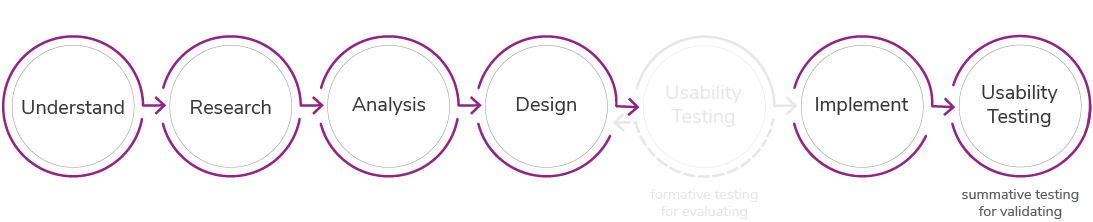
Illustrated below is the approach I use for A/B test tasks.
01 – Understand
A/B testing (also known as split testing, bucket testing or landing page optimisation) shows alternate versions of a design to a certain percentage of site visitors. The effectiveness of two or more designs are compared.
Defining the problem
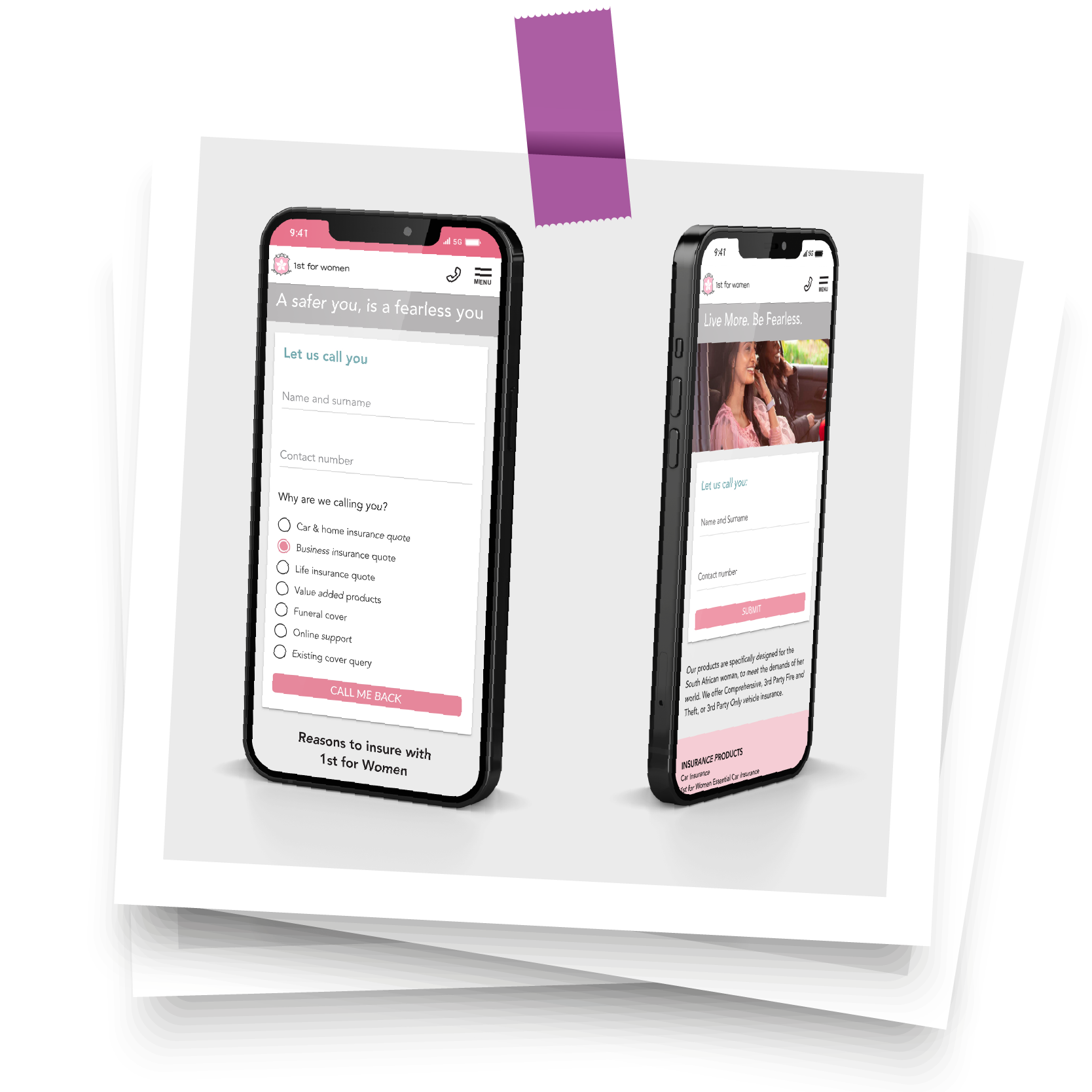
A large audience ended up on the call-me-back page, however fewer users were completing the form to request a call-back. This may have had an impact on the high call volumes in the call centre, resulting in customers holding for too long or being routed to the incorrect department.
Desired outcome
To increase the volume of completions for the call-back form.
02 – Research
I conducted a rapid expert review to identify the best UX principles I needed to consider for my task.

My research focused on the best UX principles for data entry UI controls, the use of imagery that will encourage a user to complete the form, and cognitive and visual load - to ensure a simple task is not overwhelming.
In addition, I conducted a competitor analysis on call-back pages and I also familiarised myself with the brand guideline from the marketing department.
03 – Analysis
I consulted the UX Research Team for in-depth data, specifically for the call-back page.
Insights from the following data sources seen below, assisted in how I approached the designs:
- Heat maps
- Process path (mouse movement and/clicks)
- Time it took to complete the task
- Drop-offs
- Entry and exit points
- Types of devices that were used (to help determine if we will design for mobile or desktop first)
- Technical constraints
04 – Design
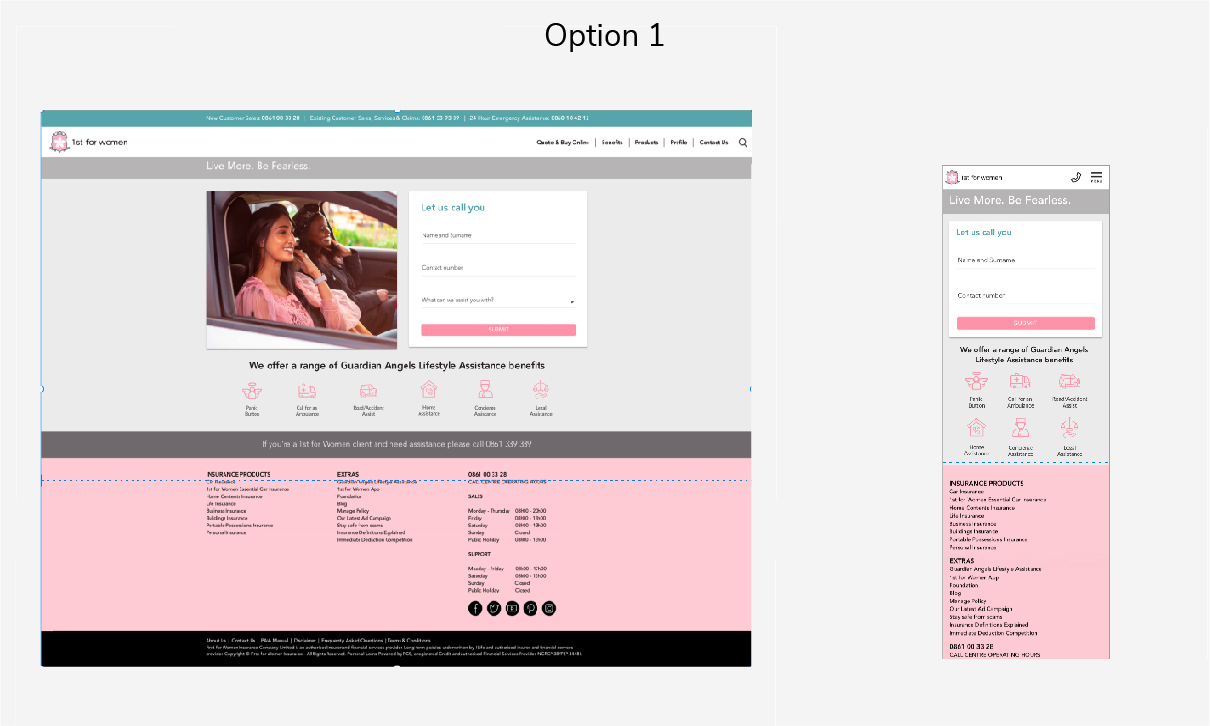
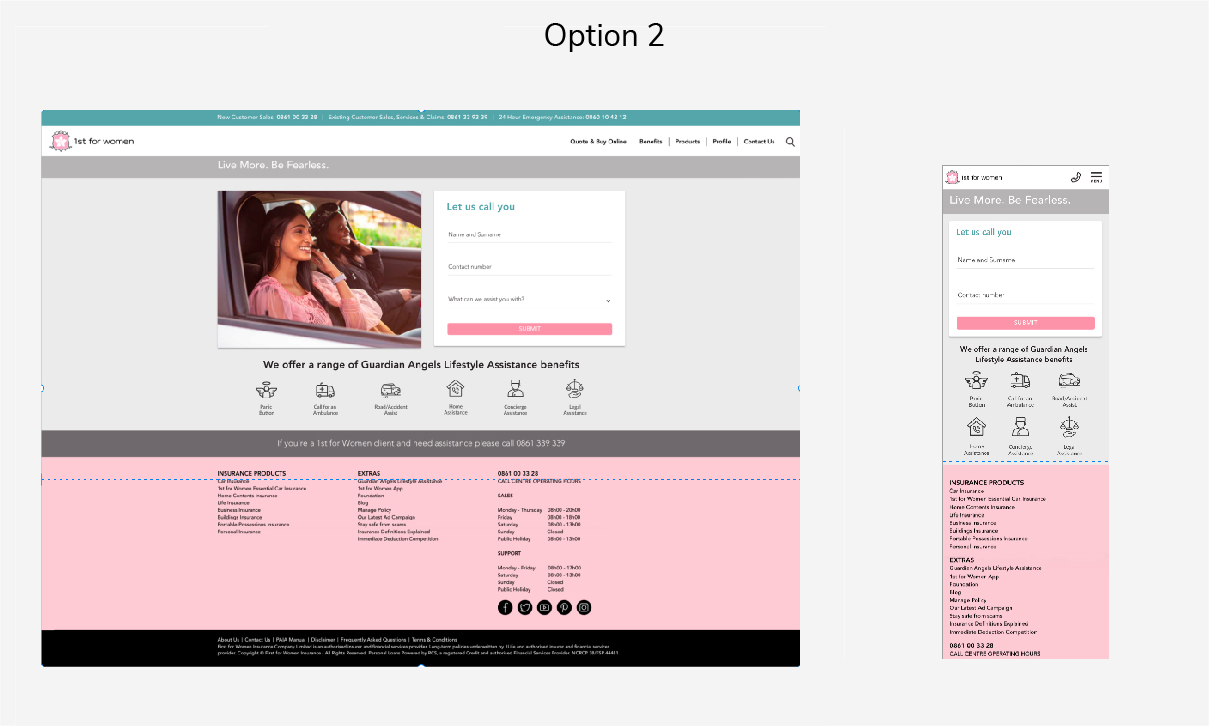
If I need to design for mobile and desktop, I always start with the mobile version; for the smallest screen 320px X 564px then scale up to desktop.
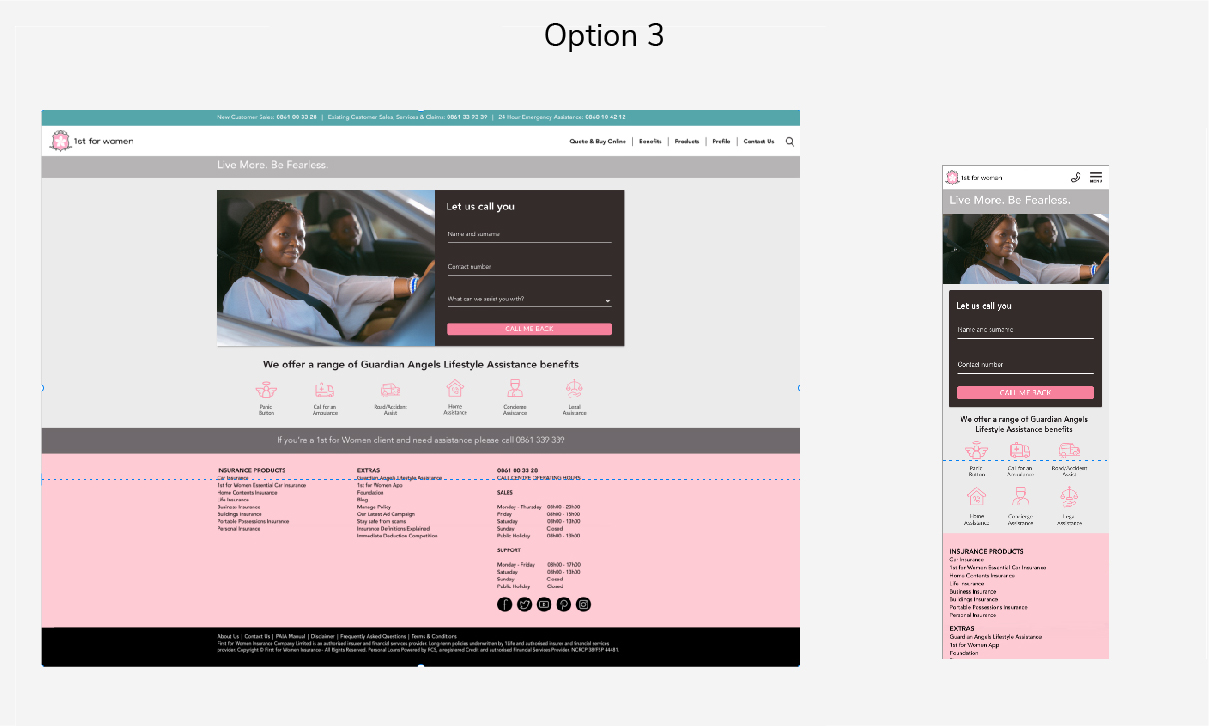
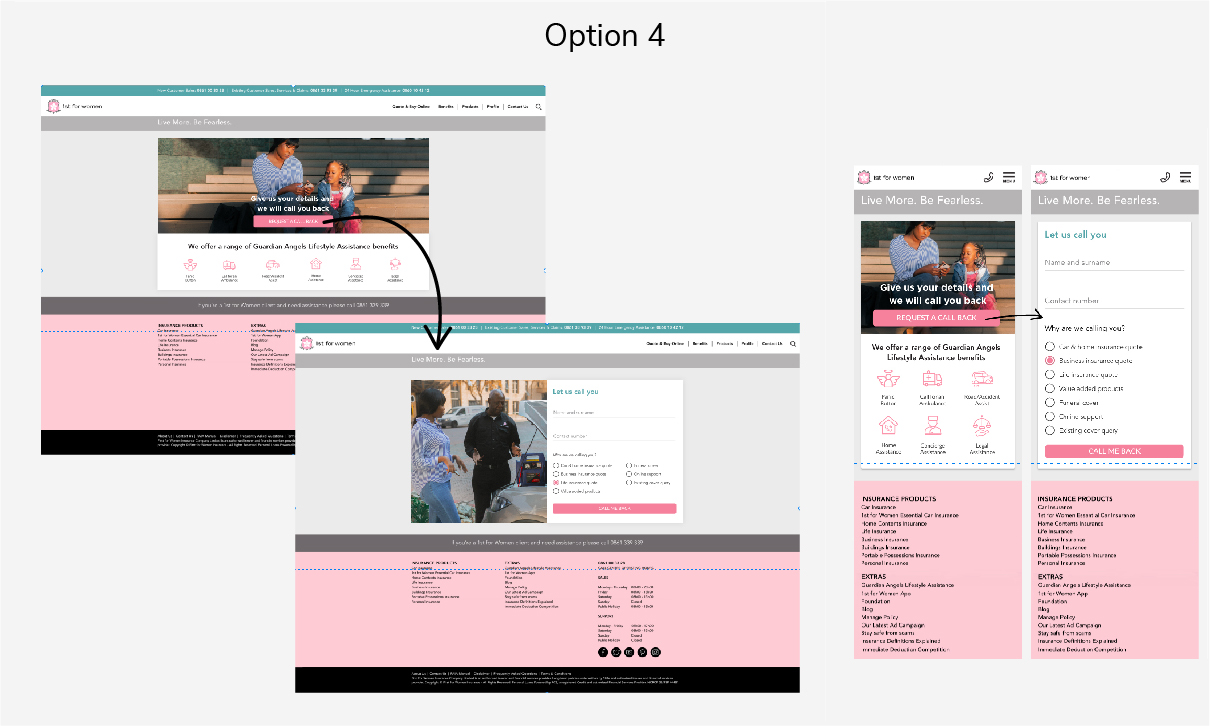
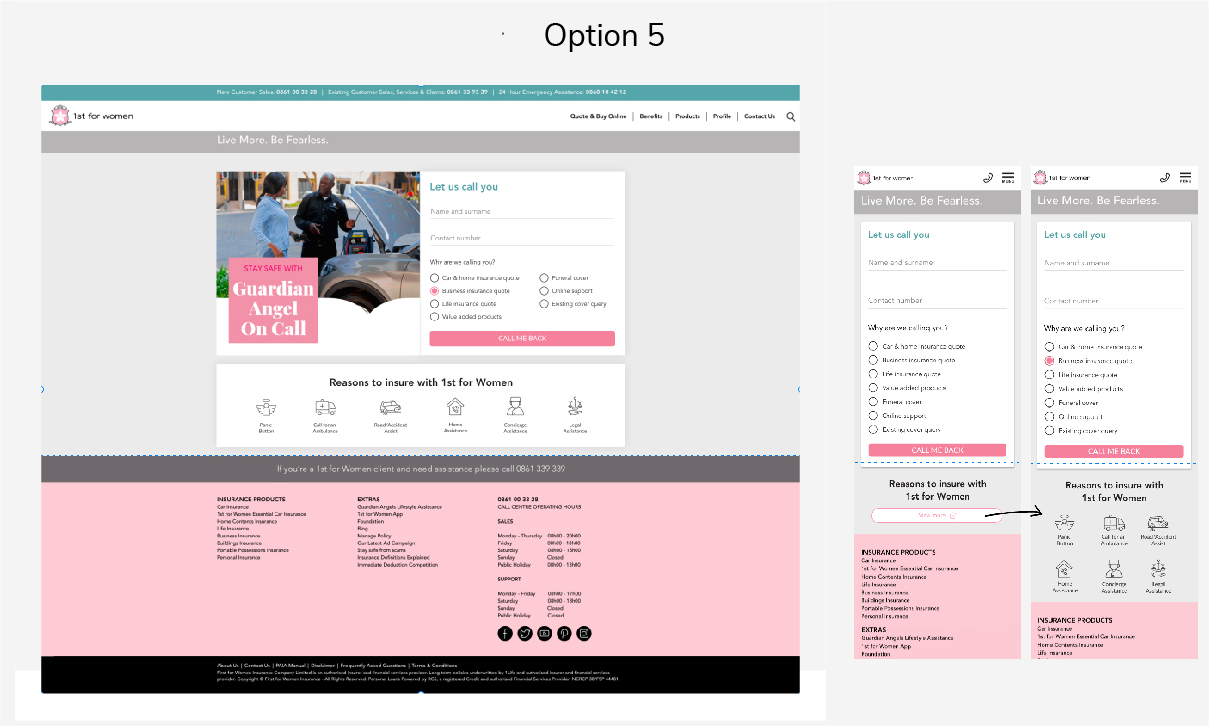
05 – Implement
Once a design option was chosen and finalised, developers implemented the page and started tracking the traffic.

06 – Usability Testing
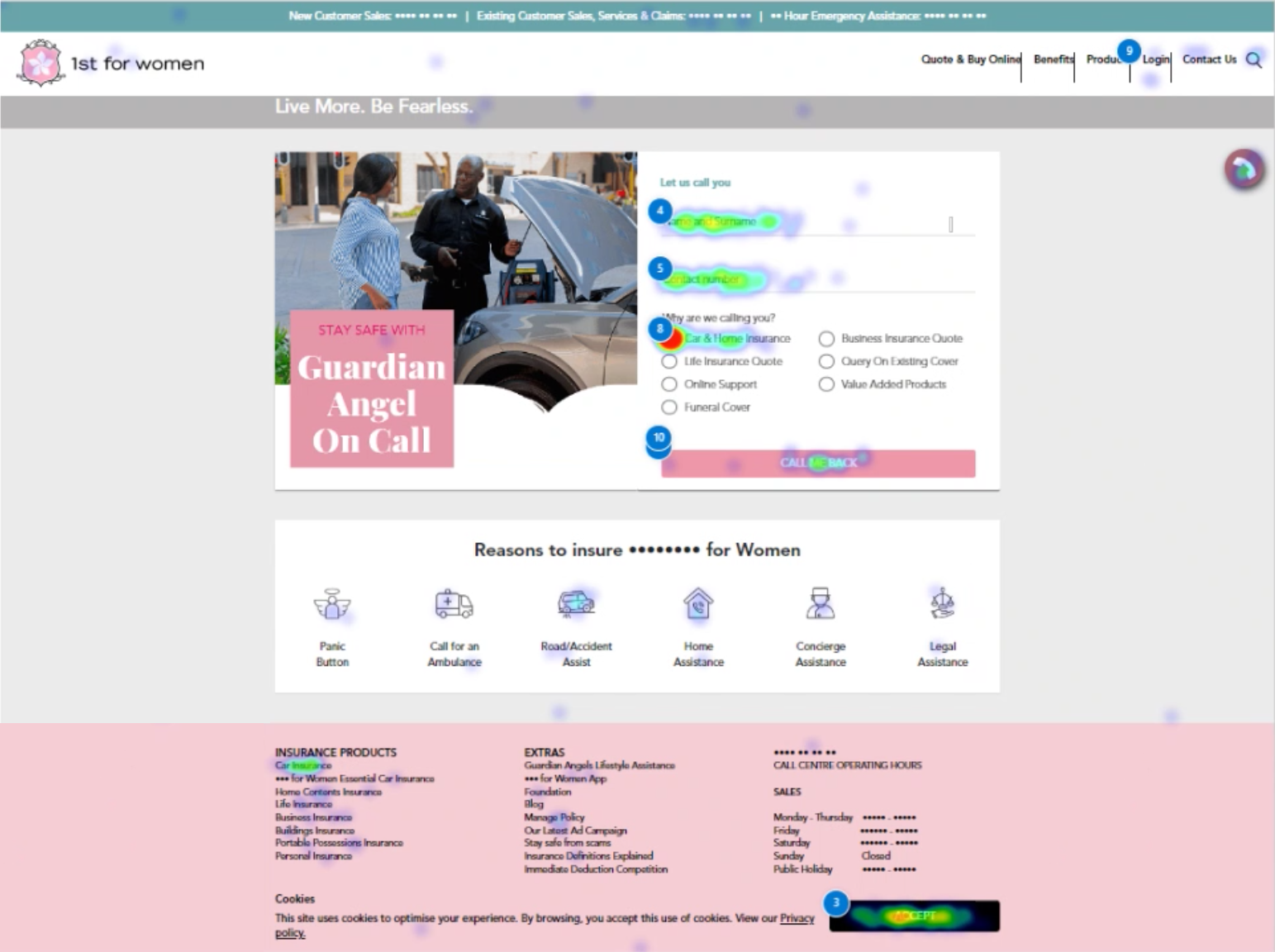
Once the test had been running for a certain period, the A/B test results were analysed; the UX design hypothesis was evaluated (through a heat-map) and the winning variation was retained on the website.
The results from this specific A/B test resulted in an overall 12% upliftment for both mobile and desktop.
View other portfolio projects

01
Mentorship
Platform
02
Showmax:
Expert Review

04
E-commerce
Car Insurance